
If you’ve been dealing with elbow pain for months, you already know how stubborn these injuries can be. You’ve rested, iced it, worn a brace, maybe tried cortisone shots. And yet you still can’t grip a coffee mug, shake someone’s hand, or open a jar without wincing. Tennis elbow and golfer’s elbow are maddening because they seem like minor injuries – until they refuse to heal. Shockwave therapy produces strong results when conservative treatment stalls out – and for chronic tendon injuries specifically, the evidence is clear.
What Tennis Elbow and Golfer’s Elbow Actually Are
Despite the names, you don’t need to play tennis or golf to develop these conditions. Tennis elbow (lateral epicondylitis) is tendon damage on the outside of your elbow, where the muscles that extend your wrist attach to the bone. Golfer’s elbow (medial epicondylitis) affects the inside of the elbow, where the flexor muscles connect.
Both are overuse injuries. Repetitive gripping, twisting motions, or forceful wrist movements create tiny tears in the tendon fibers. Over time, those microtears accumulate faster than your body can repair them. The tendon becomes inflamed, weakened, and painful.
What makes these injuries so persistent is poor blood supply. Tendons don’t get much circulation compared to muscles, so healing happens slowly – if it happens at all. Add in the fact that you use your hands constantly throughout the day, and it’s nearly impossible to truly rest the injured area.
Why Rest and Braces Don’t Always Fix the Problem
The standard advice for tennis elbow and golfer’s elbow is rest, ice, and anti-inflammatory medication. If that doesn’t work, you might get a brace or strap to offload tension from the tendon. Physical therapy comes next, followed by cortisone injections if symptoms persist.
For some people, that’s enough. But plenty of others get stuck in a cycle where the pain improves slightly, then comes roaring back the moment they return to normal activities. The tendon never fully heals because it’s not getting the blood flow and regenerative signals it needs.
Cortisone shots reduce inflammation and provide temporary pain relief, but they don’t promote healing. Repeated cortisone injections actually weaken the tendon over time. The underlying tissue damage stays exactly where it was.
That’s where shockwave therapy comes in. Instead of managing symptoms, shockwave stimulates the body’s natural healing response in tissue that’s stuck in a chronic, low-grade inflammatory state.
How Shockwave Therapy Works on Tendon Injuries
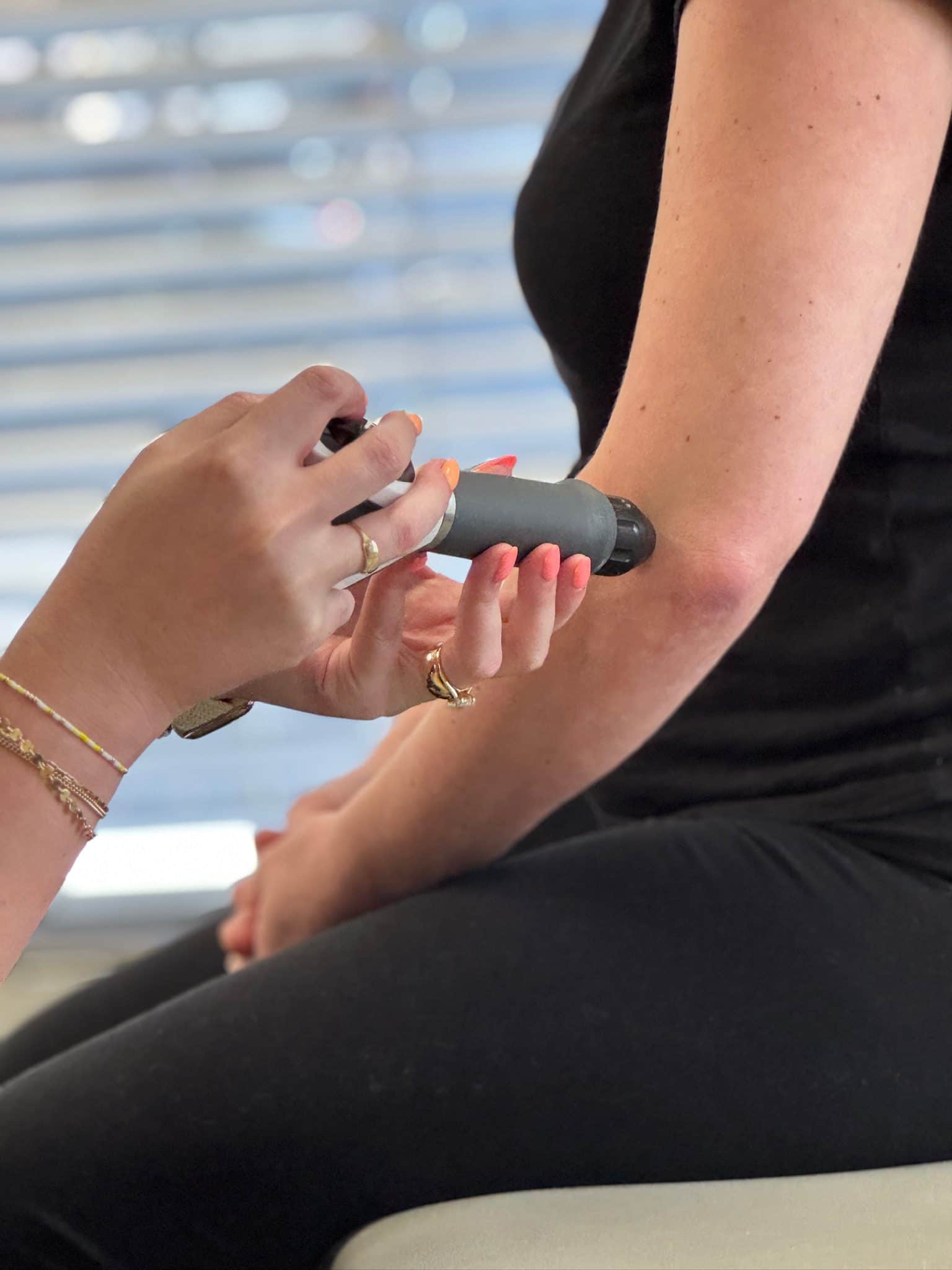
Shockwave therapy delivers high-energy acoustic waves directly to the injured tendon. Those waves create controlled microtrauma in the tissue – which sounds counterintuitive. Why would you want to cause more damage?
Here’s what’s actually happening. Chronic tendon injuries like tennis elbow and golfer’s elbow aren’t actively healing anymore. The tissue is in a stalled state where inflammation persists but repair processes have shut down. Shockwave reboots the healing cycle.
The acoustic waves drive increased blood flow to the area, bringing oxygen, nutrients, and growth factors that promote tissue regeneration. They also break down scar tissue and calcifications that have built up in the tendon. On top of that, shockwave disrupts the pain signals being sent to your brain by overstimulating nerve endings in the area.
At Indian Trail Chiropractic & Rehab, Dr. Gentile uses clinical-grade shockwave technology for patients who’ve been dealing with elbow pain for months without improvement. The treatment is non-invasive, sessions are brief, and there’s no downtime afterward.
What to Expect During Treatment
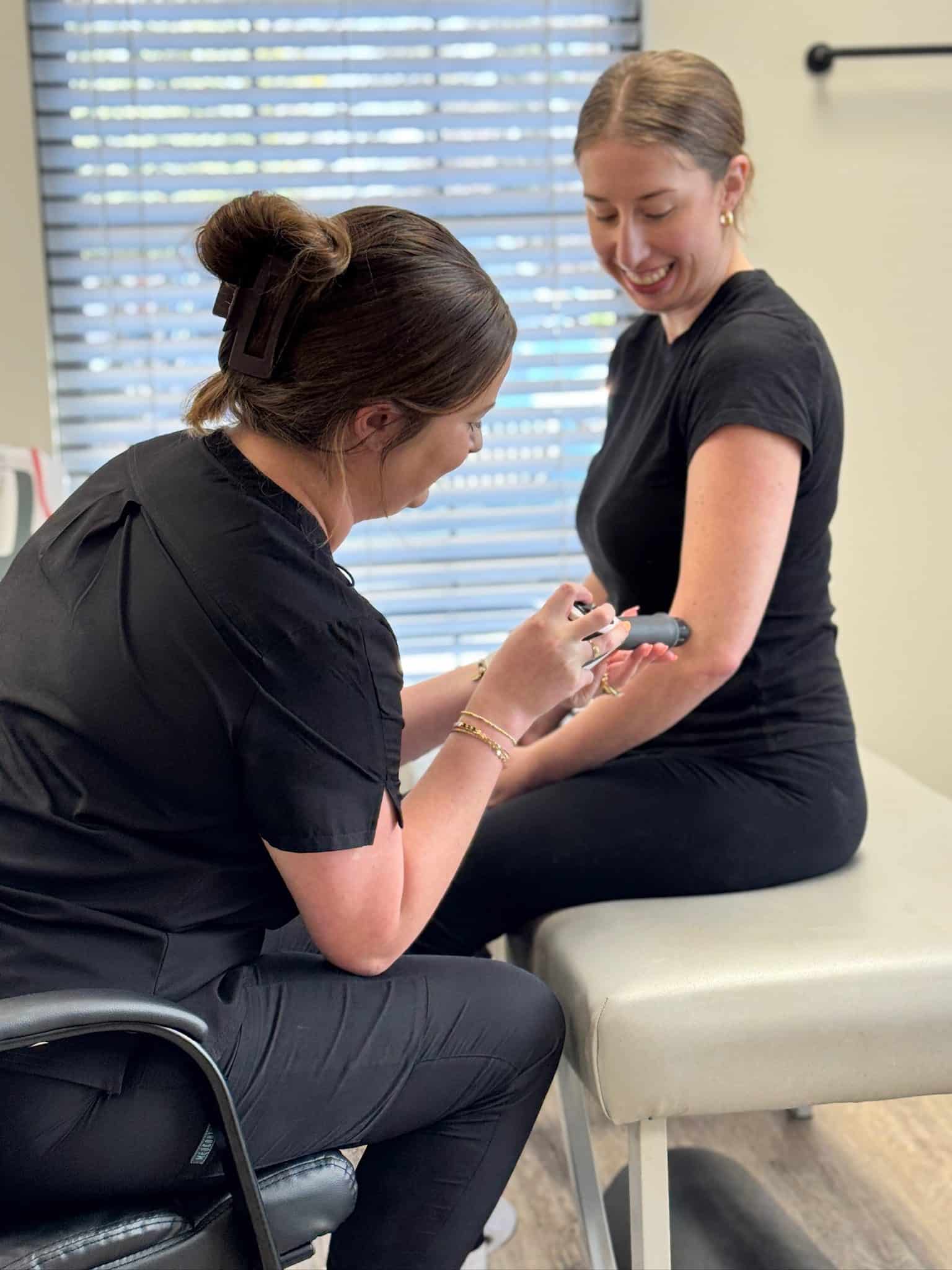
Shockwave therapy isn’t painless, but most patients describe it as tolerable discomfort rather than actual pain. You’ll feel a rapid tapping or pulsing sensation at the treatment site. The intensity is adjusted based on your feedback, and it consistently becomes easier to handle as treatment progresses.
We determine the right course of treatment based on your specific presentation and how your tissue responds – the evaluation drives that decision. Some patients notice improvement early in the process, but the real healing happens over the weeks following treatment as new tissue forms and blood flow improves.
You might feel sore for a day or two after a session – similar to post-workout muscle soreness. That’s normal and a sign the tissue is responding. You can continue most regular activities, though Dr. Gentile will give you specific guidance on activity during the treatment phase to give the tendon the best environment to heal.
Why Shockwave Works When Other Treatments Don’t
Shockwave works at the tissue level. You’re not masking pain or reducing inflammation temporarily – you’re changing the biology of the tendon.
Research confirms that shockwave increases collagen production, the main structural protein in tendons. It also stimulates the release of growth factors that promote new blood vessel formation. More blood vessels mean better circulation – which is exactly what these poorly vascularized tendons need to heal properly.
For patients who’ve tried everything else without success, shockwave is a proven non-surgical option. The success rate for chronic tendon injuries is high, and the clinical-grade technology we use produces results that reflect that.
Dr. Gentile’s background as a Certified Strength and Conditioning Specialist gives him a deep understanding of how tendons respond to load and stress. He’s treated countless athletes and active adults with overuse injuries, and he knows the difference between tissue that needs time versus tissue that’s stuck and needs intervention.
Combining Shockwave With Other Treatments
Shockwave produces its best results as part of a comprehensive approach. Graston Technique or Active Release Technique breaks up adhesions and scar tissue in the surrounding muscles and fascia, reducing strain on the injured tendon and accelerating recovery.
Corrective exercises are also critical. If your tennis elbow or golfer’s elbow developed because of poor wrist mechanics, weak forearm muscles, or compensatory movement patterns, those issues need to be addressed or the injury will return. Strengthening the tendon through controlled, progressive loading rebuilds its capacity to handle stress without breaking down again.
Treatment at our practice isn’t just about getting you out of pain – it’s about figuring out why the injury happened and making sure it doesn’t keep coming back.
Is Shockwave Right for Your Elbow Pain?
If you’ve been dealing with tennis elbow or golfer’s elbow for more than a few months and rest, bracing, or physical therapy haven’t brought lasting relief, shockwave is the right next step. It’s particularly effective for cases where pain has become chronic and other treatments have plateaued.
There are a few contraindications – pregnancy, pacemakers, blood-thinning medications, or localized conditions like infections near the treatment site. Dr. Gentile reviews your medical history and evaluates your elbow before recommending treatment, and screens for all of these upfront.
The other factor is commitment to the full treatment plan. Shockwave isn’t a one-and-done fix. Multiple sessions are required, along with follow-through on any recommended exercises or activity modifications. The protocol works – but only when it’s completed.
FAQs
Does shockwave therapy hurt?
It’s uncomfortable during the session, but not unbearable. Most people rate it as a 4 to 6 out of 10. The discomfort only lasts while the device is active, and eases immediately once the session ends.
How long do results last?
Patients consistently experience long-term relief after completing a full course of treatment. The tendon healing shockwave stimulates is real tissue regeneration – not temporary symptom relief. That said, returning to the same repetitive activities that caused the injury without addressing movement patterns puts you at risk of re-injury. That’s why we address those contributing factors as part of your care.
Can shockwave therapy help with other conditions?
Yes. Shockwave is highly effective for plantar fasciitis, Achilles tendinopathy, rotator cuff tendinopathy, and other chronic soft tissue injuries. It works best on conditions where poor blood flow is limiting the healing process.
Will insurance cover shockwave therapy?
Coverage varies. Some plans cover it under physical therapy or chiropractic care, while others don’t. We can verify your benefits and discuss payment options when you come in.
Ready to find out if shockwave therapy can finally get rid of your elbow pain? Schedule an appointment with Dr. Gentile or call (704) 821-3222.