

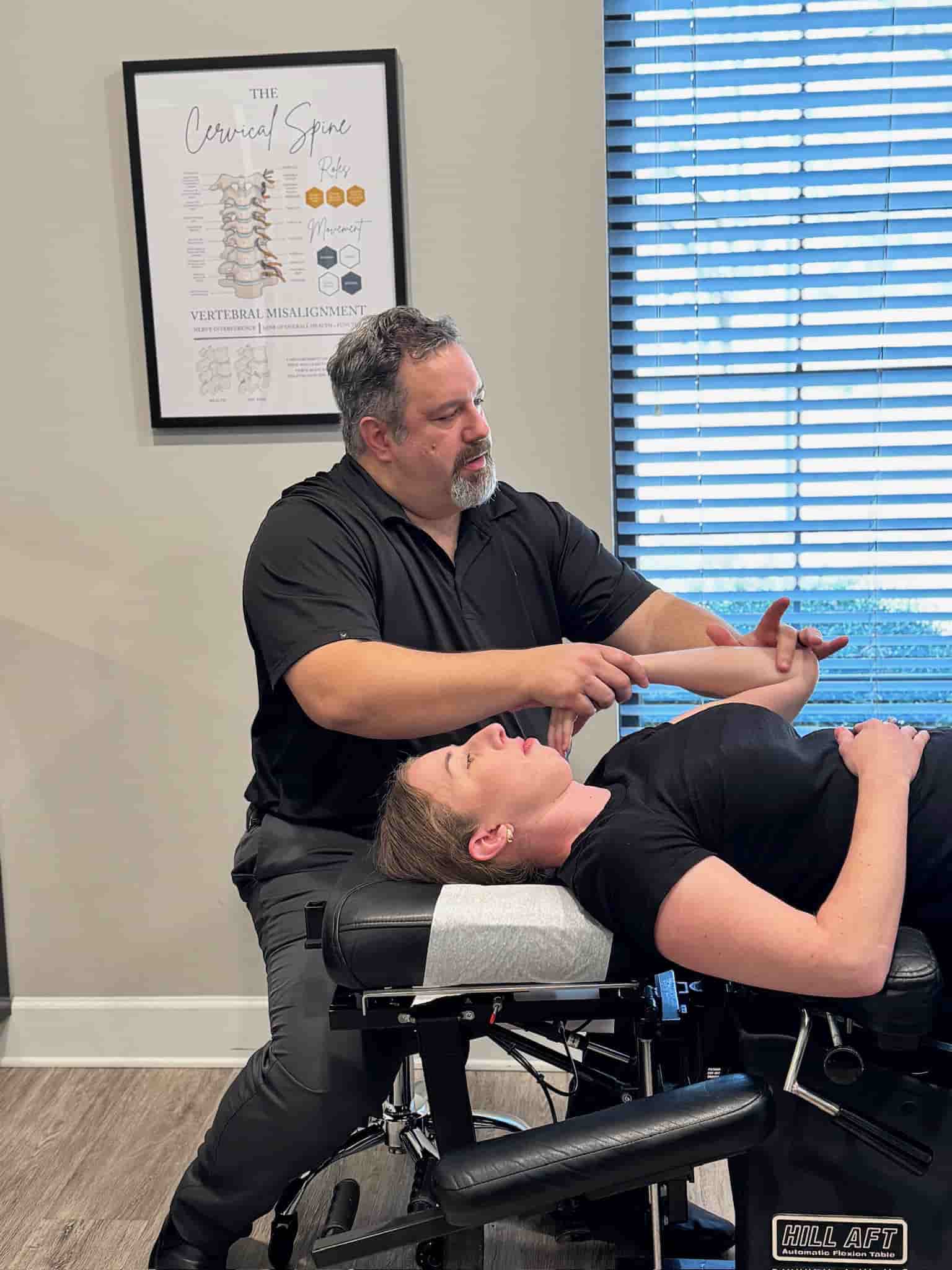
Frozen shoulder treatment in Indian Trail addresses the adhesive capsulitis causing severe pain, stiffness, and limited range of motion in the shoulder joint. At Indian Trail Chiropractic & Rehab, Dr. Gentile uses gentle shoulder mobilization, soft tissue therapy, and progressive rehabilitation to restore mobility and eliminate pain through the three stages of frozen shoulder without relying on cortisone injections or manipulation under anesthesia.
What Is Frozen Shoulder?
Frozen shoulder, medically called adhesive capsulitis, is a condition where the shoulder capsule (the connective tissue surrounding the joint) becomes inflamed and thickened. This creates severe stiffness and pain that progressively worsens, then gradually improves.
The shoulder literally feels frozen. Simple activities like reaching overhead, putting on a jacket, or reaching behind your back become difficult or impossible.
Frozen shoulder typically affects people between 40 and 60 years old and is more common in women. People with diabetes, thyroid disorders, or previous shoulder injuries are at higher risk.
The Three Stages of Frozen Shoulder
Frozen shoulder progresses through three distinct stages, each lasting several months.
Stage 1: Freezing (2-9 months)
Pain gradually increases, often worse at night. Range of motion slowly decreases. This stage is the most painful but mobility loss isn’t complete yet.
Many people initially think they have a rotator cuff injury or simple shoulder strain. As stiffness progresses despite rest, frozen shoulder becomes apparent.
Stage 2: Frozen (4-12 months)
Pain may actually decrease compared to stage one, but stiffness is severe. The shoulder has significantly limited range of motion in all directions, particularly external rotation and reaching overhead.
Daily activities become extremely challenging. This stage is frustrating because the shoulder won’t move despite your efforts.
Stage 3: Thawing (6-24 months)
Range of motion gradually returns. Pain continues decreasing. Recovery is slow but steady during this phase.
Without treatment, full recovery can take 18 months to 3 years. Proper treatment significantly accelerates this timeline.
What Causes Frozen Shoulder?
The exact mechanism isn’t fully understood, but several factors contribute.
Prolonged Immobilization
Keeping the shoulder immobile for extended periods after injury or surgery increases frozen shoulder risk. The capsule tightens from lack of movement.
Systemic Conditions
Diabetes significantly increases frozen shoulder risk. People with thyroid disorders, Parkinson’s disease, and cardiovascular disease also have higher incidence.
Previous Shoulder Issues
Rotator cuff injuries, shoulder surgery, or fractures can trigger frozen shoulder, especially if recovery involves prolonged immobilization.
Age and Gender
The condition predominantly affects people over 40, with women more commonly affected than men.
Why Frozen Shoulder Is Different
Frozen shoulder differs from other shoulder pain conditions in important ways.
Global Motion Loss
Unlike rotator cuff problems that primarily limit specific movements, frozen shoulder restricts motion in all directions. External rotation is typically most limited.
Capsular Pattern
The stiffness follows a characteristic pattern. External rotation is most restricted, followed by abduction (raising arm to the side), then internal rotation.
Progressive Nature
The condition progresses through predictable stages regardless of initial treatment, though proper care significantly improves outcomes and timeline.
How We Treat Frozen Shoulder
Frozen shoulder treatment must be matched to the current stage. Aggressive treatment during the freezing stage can worsen pain. Treatment during the frozen and thawing stages focuses on restoring mobility.
Stage 1 (Freezing) Treatment
Pain management and maintaining as much motion as possible are priorities. Deep tissue laser therapy reduces inflammation and pain without medication.
Gentle shoulder mobilization maintains available range without forcing movement that increases inflammation.
We teach gentle pendulum exercises and self-mobilization techniques you can do at home.
Stage 2 (Frozen) Treatment
Progressive mobilization becomes more aggressive as we work to restore motion. Shoulder adjustments and capsular stretching techniques gradually increase mobility.
Active Release Technique addresses restrictions in muscles surrounding the shoulder. While the capsule is the primary problem, releasing muscle restrictions helps.
We teach specific stretching exercises targeting the directions most limited by adhesive capsulitis.
Stage 3 (Thawing) Treatment
Aggressive mobilization and strengthening accelerate recovery. The capsule is releasing naturally, and we help this process along.
Progressive exercise programs restore strength as range of motion returns. The shoulder has been weak from disuse and needs rebuilding.
Treatment Techniques We Use
Specific techniques address the capsular restrictions characteristic of frozen shoulder.
Gentle Joint Mobilization
Graded mobilization techniques progressively stretch the tight capsule. These are performed at the end range of your current mobility to gradually increase it.
Capsular Stretching
Sustained stretches in specific directions target the tightest parts of the capsule. External rotation stretching is particularly important.
Soft Tissue Work
While addressing surrounding muscles doesn’t fix the capsule itself, releasing restrictions in the rotator cuff, pectorals, and lat muscles improves overall shoulder function.
Home Exercise Program
Daily home exercises are crucial for frozen shoulder recovery. We provide specific exercises matched to your current stage and capabilities.
Exercises for Frozen Shoulder
Specific exercises help at different stages.
Early Stage Exercises
Pendulum exercises maintain motion without aggravating inflammation. Gentle active-assisted range of motion prevents further stiffening.
Middle Stage Exercises
Wall walks gradually increase forward flexion. Doorway stretches target external rotation. Overhead towel stretches work on multiple directions.
Late Stage Exercises
Resistance band exercises rebuild strength. Functional reaching activities retrain normal movement patterns.
What to Avoid
Certain approaches can worsen frozen shoulder or delay recovery.
Complete Immobilization
Avoiding all shoulder movement makes adhesive capsulitis worse. Gentle movement within pain tolerance is important even during the painful early stage.
Aggressive Manipulation
Forcing the shoulder through its restricted range can cause more inflammation and damage. Progressive, gentle mobilization works better.
Ignoring the Problem
While frozen shoulder eventually resolves on its own, treatment significantly reduces the timeline and improves final outcomes.
How Long Does Recovery Take?
Without treatment, frozen shoulder typically resolves in 18 months to 3 years. With proper treatment, most people regain functional range of motion in 6 to 12 months.
The timeline varies based on factors like diabetes, how early treatment begins, and consistency with home exercises.
Preventing the Other Shoulder
About 20% of people who develop frozen shoulder in one shoulder eventually develop it in the other. Risk factors include diabetes and incomplete rehabilitation of the first shoulder.
Maintaining shoulder mobility through regular movement and addressing any stiffness early reduces this risk.
Frozen Shoulder vs. Other Shoulder Conditions
Distinguishing frozen shoulder from rotator cuff tears, impingement, or arthritis is important because treatment differs.
Rotator Cuff Tears
Rotator cuff injuries cause weakness and pain with specific movements but don’t create the global stiffness of frozen shoulder. Passive range of motion (someone else moving your arm) is typically preserved with rotator cuff tears but restricted with frozen shoulder.
Shoulder Impingement
Impingement creates pain during mid-range of motion but allows movement at the extremes. Frozen shoulder limits all motion.
Shoulder Arthritis
Arthritis creates gradual stiffness over years. Frozen shoulder develops over months and follows the characteristic stage progression.
When Other Treatments Might Be Needed
Most frozen shoulder cases respond to conservative treatment. Occasionally, other interventions are considered.
Corticosteroid Injections
Cortisone injections may provide temporary pain relief during the painful freezing stage. They don’t speed overall recovery but can improve comfort.
Manipulation Under Anesthesia
For severe cases not responding to conservative care, manipulation under anesthesia can break up adhesions. This is typically considered only after 6 to 12 months of unsuccessful treatment.
Surgery
Arthroscopic capsular release is rarely needed but can be effective for refractory cases.
Managing Expectations
Frozen shoulder recovery requires patience. Progress is slow and sometimes frustrating. Having realistic expectations about the timeline helps you stay committed to treatment.
Most people regain functional range of motion, though some minor restriction may persist. This rarely affects daily activities once the condition resolves.
Why Choose Indian Trail Chiropractic for Frozen Shoulder
As a Certified Chiropractic Extremity Practitioner, I have specialized training in shoulder conditions including frozen shoulder. I understand the natural progression and how to optimize treatment for each stage.
We provide comprehensive care from initial diagnosis through complete recovery, adjusting our approach as you progress through the stages.
With gentle mobilization techniques, advanced soft tissue therapy, and progressive rehabilitation, we help patients throughout Indian Trail recover from frozen shoulder faster and more completely.
Regain Shoulder Mobility
If frozen shoulder is limiting your ability to work, sleep, or perform daily activities, specialized treatment accelerates recovery. At Indian Trail Chiropractic & Rehab, we help patients throughout Union County overcome frozen shoulder and restore full shoulder function.
Ready to address frozen shoulder? Call us at (704) 821-3222 or schedule your appointment online today.