

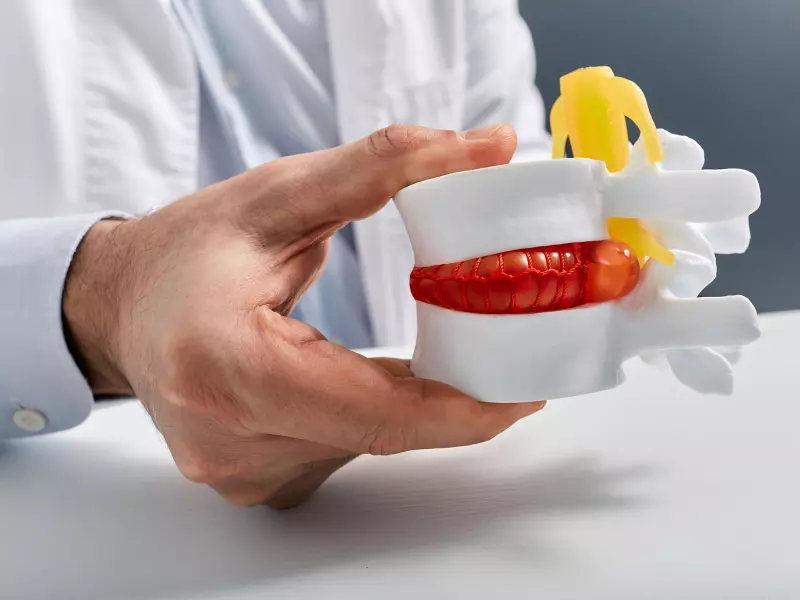
Herniated and bulging discs are among the most common causes of serious back and neck pain – and both respond very well to the right conservative treatment approach. At Indian Trail Chiropractic & Rehab, Dr. Cameron Gentile, DC, CCEP, CSCS uses spinal decompression, corrective chiropractic care, and targeted rehabilitation to treat disc problems without surgery. A thorough evaluation determines exactly which protocol is right for your specific presentation.
Understanding Disc Problems
Your spine has 23 intervertebral discs acting as shock absorbers between the vertebrae. Each disc has two parts: a tough outer ring called the annulus fibrosus and a gel-like center called the nucleus pulposus. When either of these structures becomes compromised, that’s when problems start.
Patients often use “herniated” and “bulging” interchangeably, but they’re distinct conditions with different implications for treatment.
Bulging Discs
A bulging disc is the more common of the two. Picture a hamburger that’s slightly too big for its bun. The disc extends outward, usually affecting a large portion of its circumference, but the outer layer remains intact. Many people have bulging discs and don’t even know it because they’re not pressing on anything that causes symptoms.
When a bulging disc does cause pain, it’s typically a dull, achy sensation that worsens with certain positions or movements. Sitting for long periods often aggravates it. Bulging discs respond well to conservative treatment because the disc structure itself isn’t ruptured – which means we have a lot of good tools to work with.
Herniated Discs
A herniation is more serious. Here, the outer layer has actually torn, allowing the inner gel material to leak out. This leaked material is often what irritates or compresses nearby nerve roots, causing that sharp, shooting pain people describe.
Herniations can happen suddenly from an injury, but more often they develop gradually. Years of wear, poor posture, repetitive stress, or a combination of factors weaken the outer layer until it finally gives way. Sometimes a relatively minor movement triggers it, which is why patients often say “I just bent over to pick something up and my back went out.”
Where They Happen Matters
Location determines symptoms. Cervical (neck) disc problems can cause pain radiating into the shoulders and arms, along with numbness or tingling in the fingers. Lumbar (lower back) disc issues are more common and often produce sciatica, that characteristic pain shooting down the leg.
The specific nerve being affected dictates where you feel symptoms. A disc problem at L4-L5 produces different patterns than one at L5-S1. This is why proper evaluation matters so much before starting any treatment.
What We See at Our Practice
After 20+ years treating patients in Indian Trail and the surrounding Union County area, Dr. Gentile has observed some consistent patterns with disc problems.
The Typical Patient Story
Most people who come in with disc issues have already tried a few things. Rest. Ice. Maybe some over-the-counter anti-inflammatories. Some have been to their primary care doctor and received muscle relaxers or a referral for physical therapy. A few have been told surgery might be necessary.
What we consistently find is that the disc problem isn’t happening in isolation. There’s usually a reason that particular disc failed. Poor core stability, movement dysfunction, postural habits, or biomechanical issues elsewhere in the body created the conditions for that disc to break down.
This is where our approach differs from just chasing the pain. Yes, we want to reduce your symptoms. But if we don’t address why the disc herniated in the first place, you’re likely to re-injure it or develop problems at adjacent levels.
Signs That Warrant Immediate Medical Attention
Before discussing treatment, there’s an important caveat. Certain symptoms require emergency evaluation, not chiropractic care.
Loss of bladder or bowel control, progressive weakness in both legs, or numbness in the saddle area (inner thighs and groin) can indicate cauda equina syndrome. This is a medical emergency requiring immediate surgical intervention. If you’re experiencing these symptoms, go to the emergency room.
For most disc problems, conservative care is the right first step – and it produces strong results.
How We Treat Disc Problems
Our approach combines several therapies based on what each patient needs. Not everyone gets the same treatment plan because not everyone has the same underlying issues.
Spinal Decompression Therapy

Spinal decompression is central to our disc treatment protocols. The table gently stretches the spine, creating negative pressure within the disc. This does two things: it encourages retraction of herniated or bulging disc material, and it promotes the flow of nutrients and oxygen into the disc to support healing.
Sessions typically last 15-30 minutes. Most patients find it comfortable, even relaxing. We determine the right course of treatment based on severity and how you respond – the evaluation drives that decision, not a preset number.
One thing patients appreciate about decompression is that it’s specific. We target the exact spinal level causing problems rather than treating the whole spine generically.
Corrective Chiropractic Adjustments
Adjustments restore proper alignment and movement to spinal segments that have become restricted. When a disc is injured, the surrounding muscles often spasm and the joints above and below become dysfunctional. This creates a cascade of compensations that perpetuates the problem.
Dr. Gentile uses specific, controlled adjustments rather than generalized manipulation. The goal is restoring normal joint mechanics so the body can heal properly and efficiently.
Soft Tissue Work
Disc problems rarely exist without muscle involvement. The muscles around the injured area typically tighten up as a protective response, but chronic tension slows healing and perpetuates pain.
Depending on what’s needed, treatment might include Active Release Technique to address adhesions in the surrounding muscles, or Graston Technique to break up scar tissue. These therapies complement the spinal work by ensuring the soft tissues are supporting your recovery, not working against it.
Corrective Exercise and Rehabilitation
This is where long-term results come from. Once acute pain is under control, we focus on rebuilding the stability and movement patterns that will protect your spine going forward.
Our Functional Movement Program isn’t a generic handout of stretches. It’s specific to your deficits and goals – whether that’s core stability, hip mobility, postural endurance, or all of the above. The assessment determines the program.
Patients who commit to this phase of care have far better long-term outcomes than those who stop once the pain decreases. The disc may feel better, but without addressing the underlying dysfunction, recurrence rates are high.
What to Realistically Expect
Disc problems treated with a comprehensive, structured approach produce strong results. Here’s what that typically looks like:
Timeframe: Most disc problems improve significantly with consistent conservative care. Some patients feel better quickly. Others take longer, particularly when the herniation is large or there’s significant nerve involvement. The evaluation gives us a clearer picture of what your timeline looks like.
Degree of improvement: The majority of patients achieve complete or near-complete resolution of symptoms. Results vary based on the severity of the disc injury, how long it’s been present, and how well the underlying biomechanical issues are addressed throughout care.
What helps: Patients who follow their home exercise program, make recommended ergonomic changes, and stay consistent with treatment get the best outcomes. The rehab component isn’t optional if you want lasting results.
What we can’t promise: We don’t guarantee specific outcomes for any individual patient. What we do deliver is a thorough evaluation, an evidence-based treatment approach, clinical-grade technology, and honest communication about your progress every step of the way.
When Surgery Becomes the Conversation
Conservative care is the right first approach for most disc problems, and the research supports this clearly. But there are situations where surgery is the appropriate next step.
Symptoms that haven’t improved after a quality course of conservative treatment. Progressive neurological deficits like increasing weakness or worsening numbness. Functional limitations that significantly impact quality of life despite consistent care.
If we’re not seeing the progress we expect, we’ll tell you directly. Our practice maintains relationships with orthopedic surgeons and neurosurgeons in the Indian Trail and Charlotte area, and we coordinate referrals when that’s the right call.
That said, patients who exhaust conservative options first consistently show better surgical outcomes than those who go straight to the operating room. Doing this the right way matters.
Frequently Asked Questions
Can a herniated disc heal on its own? Yes, in some cases. The body can reabsorb herniated disc material over time, and symptoms often improve as inflammation decreases. Conservative treatment accelerates this process significantly and addresses the mechanical factors that contributed to the injury.
How long before I can return to normal activities? It depends on the severity of your disc problem and what your normal activities involve. The evaluation gives us the information we need to give you specific, accurate guidance rather than a generic estimate.
Is it safe to exercise with a disc problem? The right exercise is actually beneficial. The wrong exercise makes things worse. Avoid anything that increases your symptoms – particularly heavy lifting, deep forward bending, or high-impact activities – until you’ve been evaluated and cleared for specific movements.
If you’re dealing with back pain, leg pain, or other symptoms that might be related to a disc problem, we’re here to help. Schedule an appointment at our Indian Trail office or call (704) 821-3222 to get started.