

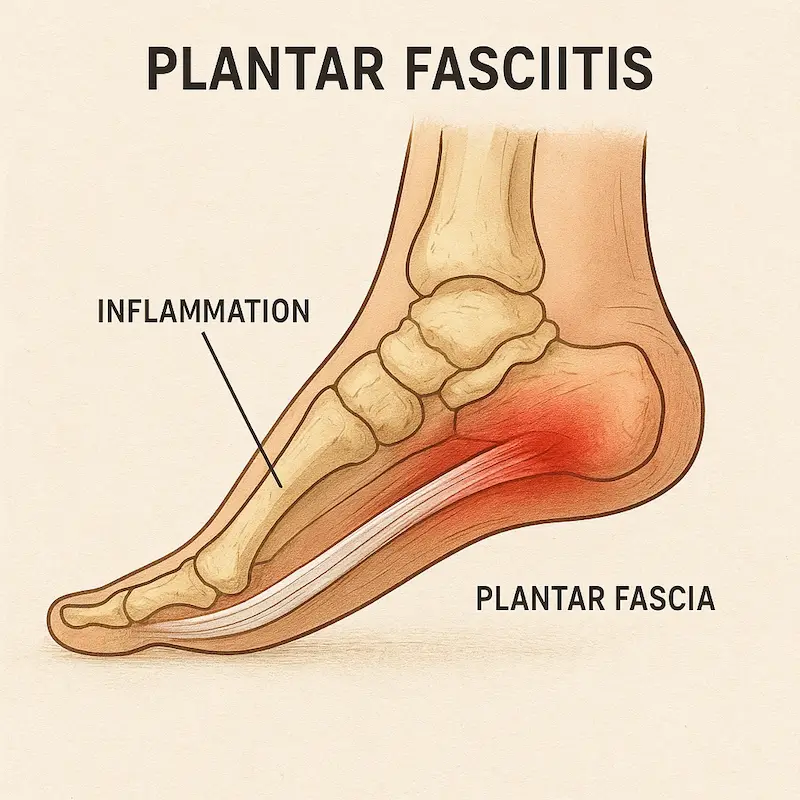
Quick Answer: Shockwave therapy is one of the most effective treatments available for chronic plantar fasciitis – the kind that lingers for months despite stretching, orthotics, and rest. At Indian Trail Chiropractic & Rehab, Dr. Cameron Gentile uses clinical-grade shockwave technology as part of a comprehensive approach to heel pain, addressing not just the fascia itself but the biomechanical issues that contributed to the problem in the first place.
That First Step in the Morning Shouldn’t Feel Like Walking on Glass
If you’ve got plantar fasciitis, you know exactly what I’m talking about. That stabbing pain under your heel when you get out of bed. The way it eases up a bit once you’ve been moving, then comes roaring back after you’ve been sitting awhile. The frustration of trying everything – rolling a frozen water bottle under your foot, stretching your calves religiously, buying expensive insoles – and still limping around months later.
It’s one of those conditions that seems like it should be simple to fix. It’s just your foot. How complicated could it be?
Turns out, pretty complicated. The plantar fascia is a thick band of connective tissue that runs along the bottom of your foot, connecting your heel bone to your toes. When it gets irritated and inflamed – usually from repetitive stress, poor footwear, tight calves, or biomechanical issues – it becomes stubbornly resistant to healing. The tissue thickens. Micro-tears accumulate faster than your body can repair them. And because you can’t exactly stop walking, you keep aggravating it every single day.
This is why plantar fasciitis has a reputation for dragging on forever. Approximately 2 million patients are treated for this condition every year, and a significant portion of those cases become chronic.
Why the Usual Treatments Sometimes Fall Short
The standard advice for plantar fasciitis isn’t bad. Rest when you can. Stretch your calves and the fascia itself. Wear supportive shoes. Try orthotics. Ice after activity. Take NSAIDs for inflammation.
For a lot of people, this works. Give it several months of consistent effort, and the problem gradually resolves.
But that assumes everything goes according to plan. And for plenty of people, it doesn’t.
Maybe you have a job where you’re on your feet all day and rest isn’t really an option. Maybe the stretching helps temporarily but the pain keeps coming back. Maybe you’ve already tried two different pairs of orthotics and neither made much difference. Maybe it’s been 18 months and you’re starting to wonder if this is just your life now.
This is where shockwave therapy enters the conversation. For chronic plantar fasciitis that hasn’t responded to conservative care, shockwave produces strong results – and the research backs that up.
What Shockwave Does Differently
The technical name is Extracorporeal Shockwave Therapy, or ESWT. A handheld device delivers acoustic pressure waves – not electrical shocks – deep into the tissue. Those waves create controlled microtrauma in the affected area.
Sounds like the opposite of what you’d want, right? More trauma to already damaged tissue?
Here’s what’s actually happening. When tissue gets stuck in a chronic inflammatory state, it stalls out. Your body’s repair mechanisms aren’t keeping up with the ongoing damage. The healing process has essentially stopped.
Shockwave restarts that process. The controlled stress signals your body to send more blood to the area, ramp up collagen production, and clear out the inflammatory debris that’s been accumulating. It’s like jumpstarting a car with a dead battery – you need an external input to get things moving again.
The research on shockwave for plantar fasciitis is more robust than for almost any other soft tissue condition. Multiple systematic reviews confirm its effectiveness, particularly for cases that haven’t responded to conservative treatment. The clinical results we see in our Indian Trail office align with that literature consistently.
The Experience: What Treatment Actually Looks Like
You’ll sit or lie down with your foot accessible. A coupling gel gets applied to the treatment area – similar to ultrasound gel. The provider positions the shockwave device against your heel or wherever the fascia is most affected.
Then come the pulses. Rapid, repetitive tapping sensations delivered into the tissue. The intensity is adjustable, and we start lower and work up based on your feedback.
Is it comfortable? No – let’s be honest about that. When the device hits particularly tender spots, it’s intense. Some people describe it as a deep bruising sensation. Others compare it to someone pressing hard on an already-sore area. But it’s tolerable for most people, and the sessions are short.
Afterward, you might have some residual soreness – similar to the ache after deep tissue massage on a tight muscle. Nothing that prevents you from walking out and going about your day, but you’ll be aware of your heel for a bit.
We determine the right course of treatment based on your specific presentation and how you respond. The evaluation drives that decision.
The Question Nobody Wants to Ask: Is It Worth the Money?
Insurance coverage for shockwave therapy varies. Some plans cover it for plantar fasciitis specifically. Others don’t. We’ll help you understand your options when you come in.
Here’s how to think about the value. If you’ve already spent money on orthotics, physical therapy copays, supportive shoes, and various gadgets – and you’re still dealing with daily heel pain – what’s that costing you? Not just financially, but in terms of quality of life? The activities you’re avoiding? The morning dread of getting out of bed?
For chronic plantar fasciitis that hasn’t responded to conservative treatment, shockwave produces meaningful, lasting results for the majority of patients. And unlike cortisone injections – which reduce inflammation temporarily but don’t repair the underlying tissue – shockwave promotes actual tissue healing. That’s a meaningful difference.
The comparison to cortisone is worth pausing on. Injections can feel like a miracle when you’re in pain – inflammation drops and suddenly you can walk normally again. But it’s temporary. The underlying tissue damage is still there. Repeated steroid injections may actually increase the risk of plantar fascia rupture, which is a much bigger problem than the original condition.
Shockwave takes longer to produce results – you won’t walk out of your first session pain-free – but the goal is fixing the tissue, not masking the symptoms.
Why the Foot Isn’t Always the Whole Story
Plantar fasciitis doesn’t happen in isolation. Your foot is the end point of a kinetic chain that starts at your hip. The way you walk, the strength of your glutes, the flexibility of your calves and ankles, the alignment of your knees – all of it affects how force travels through your foot with every step.
Sometimes plantar fasciitis is purely a local problem. Worn-out shoes, too much too soon with a new running program, rapid weight gain – straightforward causes with straightforward solutions.
But often there’s something else going on. Tight calves forcing your foot to compensate in ways that overload the fascia. Hip weakness changing your gait mechanics. Old ankle sprains that altered how you distribute weight.
Shockwave accelerates healing in the fascia itself – that’s valuable. But if the biomechanical issues that contributed to the problem aren’t addressed, you’ll end up right back where you started. The tissue heals, you return to normal activities, the same faulty mechanics stress the same tissue, and months later you’re dealing with it again.
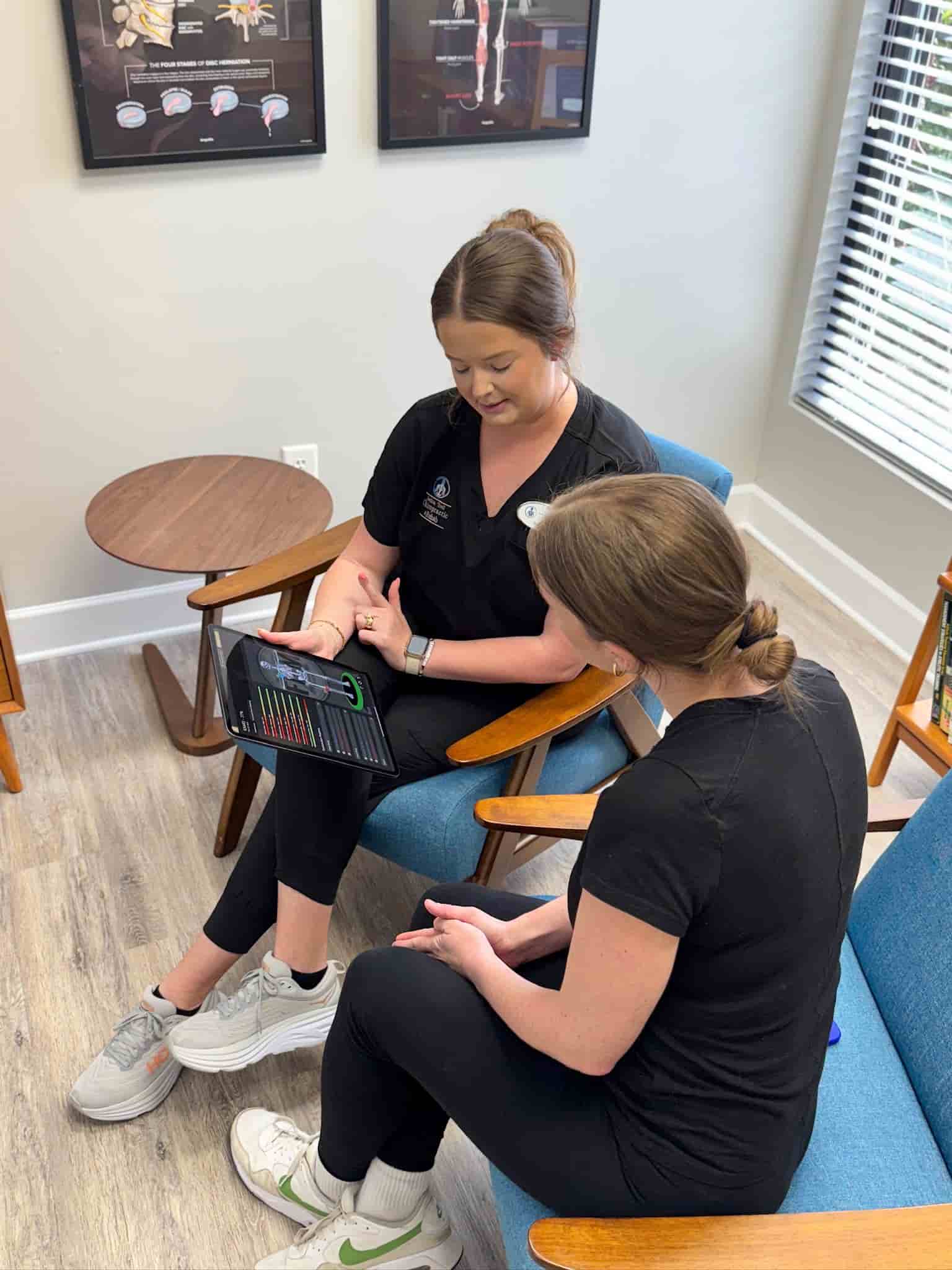
This is why treatment at Indian Trail Chiropractic goes beyond pointing a device at your heel. Dr. Gentile’s background in sports performance and movement assessment means every plantar fasciitis case gets evaluated through that lens – gait analysis, hip and ankle mobility, corrective exercises tailored to whatever weaknesses or restrictions are present.
The shockwave is one tool in a larger toolkit. It produces its best results as part of a comprehensive strategy, not as a standalone fix.
Who’s a Good Candidate?
Shockwave therapy for plantar fasciitis is the right call when:
- You’ve been dealing with symptoms for several months with no lasting relief
- Conservative treatments – stretching, orthotics, rest – haven’t resolved the problem
- You want to avoid cortisone injections or have already had them without sustained benefit
- Surgery isn’t appealing – and for this condition, it rarely needs to be
- You’re committed to combining shockwave with corrective exercise and addressing contributing factors
If your symptoms just started a few weeks ago, give the standard approaches a fair shot first. Your body may resolve it with basic interventions.
There are also a few contraindications – pregnancy, blood clotting disorders, active infection in the area among them. Dr. Gentile screens for these during the initial evaluation before recommending treatment.
What to Expect for Results
Shockwave therapy produces strong outcomes for chronic plantar fasciitis. Most patients see meaningful reduction in heel pain and a return to activities that had become difficult or impossible.
Some people experience dramatic improvement – heel pain that’s plagued them for a year drops significantly and stays there. Others see meaningful but more gradual progress: pain decreases, morning stiffness becomes manageable, activity stops triggering the same flare-ups.
Benefits often continue building after treatment ends, as the tissue remodeling process runs its course. This isn’t a same-day fix – patience is part of it. But the trajectory for most patients is consistently in the right direction.
Results vary with every patient, which is exactly why we start with a thorough evaluation. It tells us whether shockwave is the right tool for your specific presentation, what else needs to be addressed, and what a complete treatment approach looks like for you.
The Bottom Line on Shockwave for Heel Pain
Plantar fasciitis is frustrating precisely because it seems like it should be easy to fix but often isn’t. When the standard approaches haven’t delivered lasting relief, shockwave therapy is one of the most evidence-supported options available – and the clinical-grade technology we use at Indian Trail Chiropractic produces results that reflect that.
It requires some discomfort, a commitment to the full protocol, and ideally a willingness to address whatever biomechanical factors contributed to the problem. But for chronic plantar fasciitis, the results speak for themselves.
If you’ve been limping around for months wondering whether you’ll ever walk normally again, let’s figure out what’s actually going on and build a plan to fix it.
Schedule an appointment with Dr. Gentile at Indian Trail Chiropractic & Rehab, or call (704) 821-3222. We’ll evaluate what’s going on and determine the best path forward.