

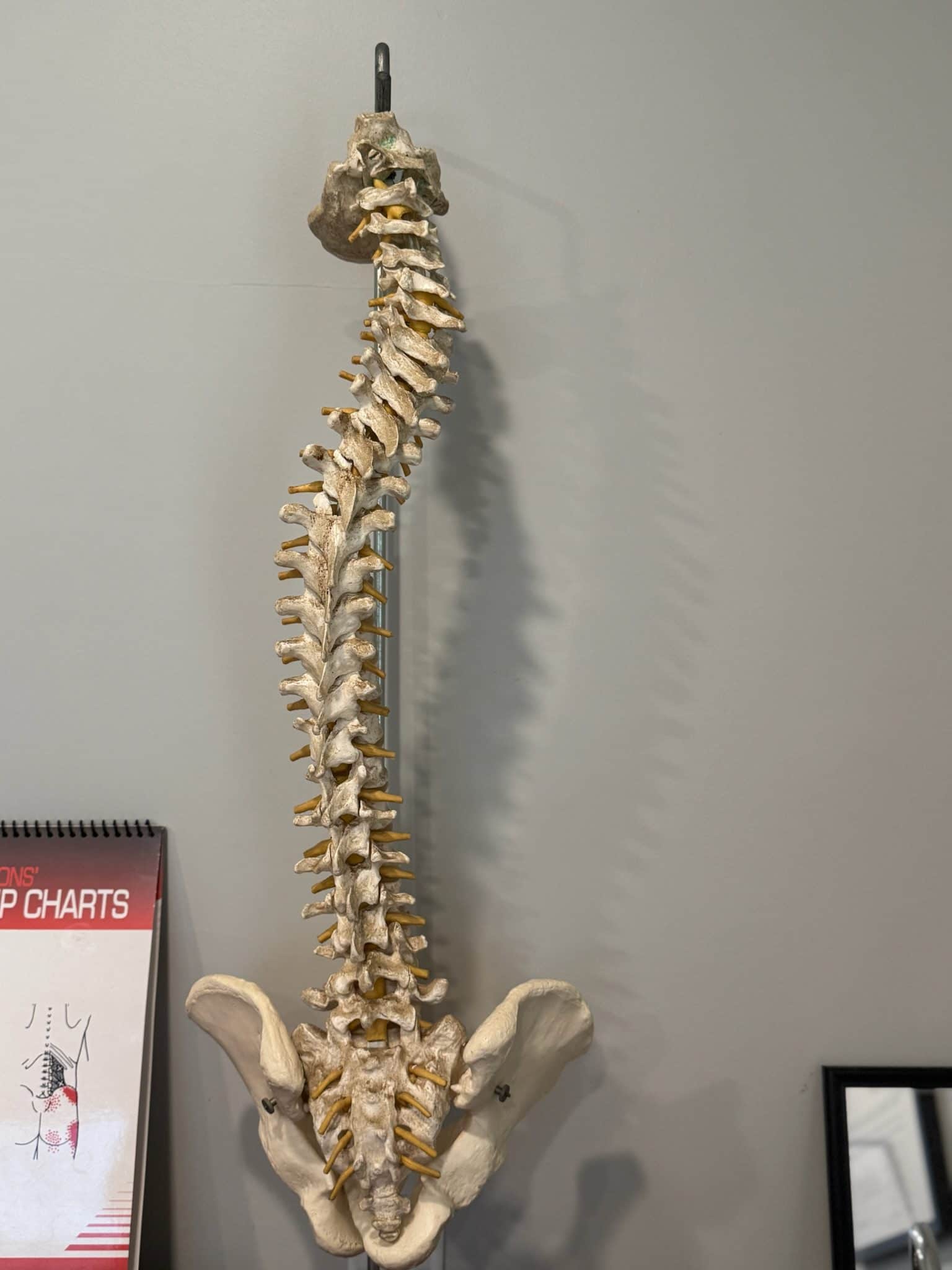
Being told you need back surgery is terrifying. Maybe your doctor looked at your MRI, pointed to a herniated disc, and said surgery is the only real solution. Or maybe you’ve been in pain for so long that surgery feels like the only option left. But here’s the reality: many people who are told they need surgery for disc problems find relief through non-surgical treatment. Surgery isn’t always necessary, and it’s not always the right first step.
When Surgery Is Actually Necessary
Let’s be clear upfront – surgery is sometimes the right call. If you have severe nerve damage, progressive weakness in your leg, or loss of bowel and bladder control (cauda equina syndrome), you need immediate surgical intervention. Those are emergency situations where delaying surgery leads to permanent nerve injury.
Surgery is also appropriate when you’ve completed a quality course of conservative treatment without improvement and you’re dealing with debilitating pain that’s destroying your quality of life. In those cases, a well-timed surgical procedure can restore function and get you back to living.
But here’s the problem: the threshold for recommending surgery varies widely depending on who you see. Some surgeons operate aggressively. Others take a more conservative approach and encourage patients to try non-surgical options first. Research consistently shows that many patients who undergo surgery for herniated discs would have improved with conservative care if they’d given it enough time and the right treatment.
The question isn’t whether surgery works – it often does. The question is whether it’s necessary in your specific case.
What Non-Surgical Disc Treatment Looks Like

Non-surgical disc treatment focuses on reducing pressure on the nerve, decreasing inflammation, and restoring proper movement patterns. The goal is creating an environment where the disc can heal and nerve irritation resolves without cutting into your spine.
Spinal decompression is one of the most effective non-surgical treatments for herniated and bulging discs. It uses a specialized table to gently stretch the spine, creating negative pressure inside the disc space. That negative pressure pulls herniated material away from the pinched nerve and allows nutrients to flow back into the disc, directly promoting healing.
Chiropractic adjustments restore proper alignment and movement in the spine, reducing stress on the injured disc. When vertebrae aren’t moving correctly, they put uneven pressure on the discs. Adjustments normalize that mechanical load.
Soft tissue therapies like Active Release Technique and Graston Technique address muscle tightness and scar tissue that contribute to pain and restricted movement. Tight muscles pull on the spine and increase disc pressure – releasing that tension is part of the equation.
Corrective exercises rebuild strength and stability in the core and lower back, protecting the disc from re-injury. A disc that’s been damaged needs support from the surrounding muscles. Without that foundation, it stays vulnerable.
At Indian Trail Chiropractic & Rehab, Dr. Gentile builds treatment plans around the specific type of disc injury, the severity of nerve involvement, and how your body responds to care. Not everyone needs the same approach, and cookie-cutter treatment doesn’t work for complex disc problems.
Who’s a Good Candidate for Non-Surgical Treatment
If your symptoms started recently and you haven’t completed a full course of conservative care yet, non-surgical treatment is the right move before jumping to surgery. Acute disc herniations respond very well to decompression, adjustments, and corrective exercise.
You’re also a strong candidate if your pain is manageable – meaning you’re not bedridden, you can still walk and function, and you don’t have red-flag symptoms like severe weakness or loss of sensation. Most disc herniations fall into this category.
Even chronic cases respond well to the right conservative approach. They take longer to resolve, but the disc can still heal when you address the underlying mechanical issues and give it the right environment to recover.
Age isn’t a disqualifying factor either. Older adults with degenerative disc disease benefit from non-surgical care, though the treatment plan looks different than it would for a younger patient with an acute injury.
The key is accurate diagnosis and commitment to the process. If you want to avoid surgery, you need to follow through with the treatment plan, do the exercises, and give it the time it needs. The evaluation tells us what that looks like for your specific situation.
How Long Does Non-Surgical Treatment Take?
That depends on the severity of your disc injury and how long you’ve been dealing with symptoms. Some patients notice significant improvement within a few weeks. Others take longer, particularly when the herniation is large or there’s significant nerve involvement.
Disc healing is a slow process. The disc has poor blood supply and is under constant mechanical stress just from sitting, standing, and moving. The evaluation gives us a clearer picture of your specific timeline and what the treatment protocol looks like. We reassess regularly and adjust based on how you’re progressing.
During treatment you’ll likely need to modify certain activities. Heavy lifting, prolonged sitting, and high-impact exercise aggravate the disc and slow healing. That doesn’t mean you’re stuck in bed – most people continue working and doing light activity – but being strategic about load and movement during this phase makes a real difference in outcomes.
Progress isn’t always linear. You might feel great one week and have a flare-up the next. That’s normal – healing happens in waves, not a straight line. The trend over time is what matters, not day-to-day fluctuations.
What Happens If Conservative Care Doesn’t Work?
If you’ve committed to a quality course of non-surgical treatment and you’re not seeing improvement – or symptoms are getting worse – it’s time to revisit the surgery conversation. At that point, conservative care has had a fair shot, and surgery becomes the appropriate next step.
But even then, there may be room to adjust the approach before going that route. If decompression alone isn’t producing the results we expect, adding targeted soft tissue work or modifying the exercise protocol sometimes makes the difference. Dr. Gentile’s 20+ years treating disc injuries means he’s seen what works, what doesn’t, and when it’s time to pivot.
The goal is never to keep you in treatment indefinitely if it’s not working. It’s to give you the best chance at avoiding surgery where that’s possible, while being direct about when surgery becomes the smarter choice.
Why Surgery Isn’t Risk-Free
Surgery for herniated discs – whether it’s a microdiscectomy, laminectomy, or fusion – carries real risks. Infection, nerve damage, bleeding, and adverse reactions to anesthesia are all possible. Most surgeries go smoothly, but complications happen.
There’s also the reality that surgery doesn’t always eliminate pain. Some patients experience ongoing chronic low back pain after surgery, either because the underlying mechanical issues weren’t addressed or because scar tissue developed during healing. Failed back surgery syndrome is well-documented, and it’s a primary reason why most surgeons encourage patients to exhaust conservative options first.
Recovery from back surgery is significant. Time off work, restrictions on lifting and bending for months, and a long rehab process to rebuild strength and mobility. For some people dealing with severe pain, that tradeoff is worth it. For others, exploring non-surgical options first is the smarter path.
The Bottom Line
If you’ve been told you need back surgery for a herniated disc, get a second opinion. Talk to a provider who specializes in non-surgical disc treatment and find out if you’re a candidate for conservative care. Surgery is sometimes necessary – but it shouldn’t be the default answer for every disc problem.
Dr. Gentile has treated thousands of patients with disc injuries over the course of his career. He’s seen cases that resolved completely with conservative care and cases that ultimately needed surgery. His job isn’t to talk you out of surgery – it’s to help you make an informed decision based on your specific situation.
If non-surgical treatment can work for you, it’s worth doing first. If it doesn’t, surgery remains an option. But if it does work, you’ve avoided a major procedure and everything that comes with it.
FAQs
How do I know if I’m a candidate for non-surgical disc treatment?
An evaluation with Dr. Gentile determines that. He’ll review your imaging, assess your symptoms, and evaluate factors like the size and location of the herniation, the degree of nerve involvement, and how long you’ve been dealing with pain. That gives you a clear answer rather than a guess.
Can a herniated disc heal on its own?
Sometimes. The body can reabsorb herniated disc material over time and symptoms can improve without treatment. But that process is unpredictable and can take a long time. Active treatment accelerates healing significantly and reduces the risk of chronic problems developing in the meantime.
Will I need surgery eventually even if I do conservative treatment?
Not necessarily. Many patients who commit to non-surgical care never need surgery. The key is giving conservative options a genuine, complete effort first – which starts with an accurate diagnosis and the right treatment plan.
Is spinal decompression the same as traction?
No. Traction applies constant pulling force, which causes muscles to tighten up defensively. Spinal decompression uses computerized, pulsing force that bypasses that muscle guarding and targets specific spinal segments precisely. It’s far more effective than old-school traction.
Ready to find out if you can avoid back surgery and treat your disc problem conservatively? Schedule an appointment with Dr. Gentile or call (704) 821-3222.