
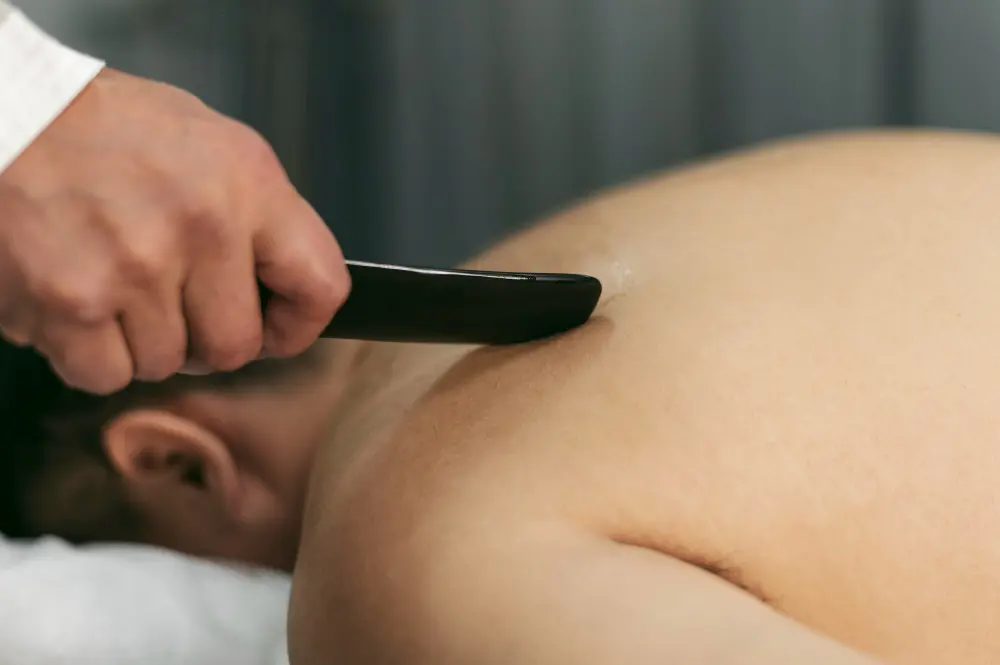
Graston Technique in Indian Trail is an instrument-assisted soft tissue therapy that breaks down scar tissue and fascial restrictions causing chronic pain and limited mobility. At Indian Trail Chiropractic & Rehab, Dr. Gentile uses this specialized technique to treat stubborn muscle tension, tendonitis, and adhesions that haven’t responded to other treatments, helping patients recover faster and move better.
What Is Graston Technique?
Graston Technique uses specially designed stainless steel instruments to detect and treat areas of scar tissue, fascial restriction, and chronic inflammation in muscles, tendons, and ligaments. The instruments allow me to feel texture changes in soft tissues that hands alone can’t detect.
When I run the instruments over your skin, they catch on areas of restriction and adhesion. This feedback guides treatment to exactly where the problem exists. The controlled micro-trauma created by the instruments stimulates your body’s natural healing response.
Think of it like breaking up old, hardened scar tissue so fresh, healthy tissue can replace it. The technique has been around for over 30 years and is used by professional sports teams, Olympic athletes, and practitioners worldwide.
How Graston Works
The Graston instruments come in different shapes and sizes, each designed for specific body areas and tissue depths. During treatment, I apply controlled pressure and stroke the instrument across the affected area.
You’ll likely see some redness or mild bruising after treatment. This is normal and indicates increased blood flow to the area. That increased circulation brings nutrients and oxygen needed for healing while removing metabolic waste.
The Science Behind It
Scar tissue forms whenever soft tissues are injured. While scar tissue is a normal part of healing, it’s denser and less flexible than healthy tissue. These adhesions restrict movement and cause ongoing pain.
Graston Technique mechanically breaks down these adhesions. The micro-trauma triggers a controlled inflammatory response that tells your body to remodel the tissue with fresh, healthy collagen fibers aligned properly. That’s actual tissue repair – not symptom management.
Conditions Graston Technique Treats
In my 20+ years treating patients throughout Indian Trail and Union County, I’ve found Graston particularly effective for certain chronic conditions.
Tendonitis and Tendinopathy
Chronic tendon issues like tennis elbow, golfer’s elbow, and Achilles tendonitis respond exceptionally well to Graston. These conditions develop from overuse and repetitive strain that creates degenerative changes in the tendon.
Traditional rest and ice provide temporary relief, but the underlying tendon damage remains. Graston stimulates actual healing in the tendon tissue. We often combine it with shockwave therapy for comprehensive tendon regeneration.
Plantar Fasciitis
That stabbing heel pain when you first step out of bed is typically plantar fasciitis. The thick band of tissue on the bottom of your foot develops micro-tears and inflammation from repetitive stress.
Graston breaks down the scar tissue and adhesions in the plantar fascia, allowing it to heal properly. Patients consistently notice significant improvement when Graston is combined with proper foot mechanics correction and custom orthotics when indicated.
IT Band Syndrome
The iliotibial band running down the outside of your thigh becomes tight and painful, particularly in runners and cyclists. Graston effectively releases IT band restrictions that foam rolling simply can’t reach.
We address the entire kinetic chain – treating not just the IT band but the hip and knee mechanics contributing to the problem.
Rotator Cuff Issues
Chronic shoulder pain from rotator cuff tendinopathy, impingement, or incomplete healing after injury responds well to Graston’s ability to break down scar tissue in the deep shoulder muscles.
Combined with extremity chiropractic adjustments that restore proper shoulder mechanics, we resolve shoulder issues that have plagued patients for months or years.
Chronic Muscle Strains
Hamstring strains, calf strains, and other muscle injuries that never fully heal have significant scar tissue preventing complete recovery. Graston remodels that scar tissue so the muscle functions properly again.
Athletes appreciate how directly this accelerates their return to training and competition.
Post-Surgical Scar Tissue
Surgery creates scar tissue. Sometimes that scar tissue becomes problematic – causing pain and limiting movement long after the surgical site has healed. Graston breaks down excessive or poorly formed scar tissue without additional surgery.
What to Expect During Graston Treatment
I start by applying a lubricant to your skin, then use the instruments to scan the area and locate restrictions. Once I’ve identified the problem areas, I apply controlled strokes with the appropriate instrument. The pressure varies based on tissue depth and your feedback.
Most patients describe the sensation as uncomfortable but tolerable. The evaluation and your response guide how aggressively we work in any given session.
Does It Hurt?
Graston isn’t painless, especially during the first few sessions when adhesions are most significant. The discomfort is temporary and manageable for most people. As scar tissue breaks down over the course of treatment, sessions become less uncomfortable.
Some soreness in the treated area for 24 to 48 hours after treatment is normal – it’s your body’s healing response. Staying hydrated and moving gently helps minimize it.
The Bruising Question
Mild bruising or redness after Graston is common and actually indicates the treatment is working. The increased blood flow to the area is part of the healing process. Most bruising resolves within a few days.
How Long Does Treatment Take?
Treatment duration depends on the severity of your condition and how long you’ve been dealing with it. Acute injuries respond faster than chronic cases with extensive scar tissue buildup – but both respond well to the right approach.
We determine the appropriate frequency and duration based on your evaluation and reassess regularly as you progress. The goal is always to get you better as efficiently as possible, not to keep you in treatment indefinitely.
Graston vs. Other Soft Tissue Techniques
You might wonder how Graston differs from massage, Active Release Technique, or foam rolling.
Graston vs. Massage Therapy
Massage therapy works on superficial muscle tension and promotes relaxation. Graston targets deeper adhesions and scar tissue that massage can’t effectively address. The instruments allow precise treatment of specific problem areas at tissue depths hands alone don’t reach.
Graston vs. Active Release Technique
Both are excellent soft tissue therapies we use at Indian Trail Chiropractic. ART relies on hands-on manual therapy combined with movement. Graston uses instruments to treat broader areas and different tissue depths.
I often use both in the same treatment session – Graston for larger fascial restrictions, ART for specific muscle adhesions and nerve entrapments.
Graston vs. Foam Rolling
Foam rolling provides general myofascial release and is great for maintenance between professional treatments. Graston offers targeted, clinically precise treatment of specific adhesions that foam rolling can’t replicate. For chronic conditions, there’s no substitute for skilled instrument-assisted therapy.
Combining Graston with Other Treatments
Graston works best as part of a comprehensive treatment approach. At Indian Trail Chiropractic, we integrate it with other therapies based on your specific needs.
Graston and Chiropractic Adjustments
Soft tissue restrictions prevent joints from moving and staying in proper alignment. When we release those restrictions with Graston, chiropractic adjustments hold better and produce longer-lasting results.
Similarly, joints that aren’t moving properly create compensatory muscle tension. Adjusting the joint makes soft tissue therapy more effective. The two approaches reinforce each other directly.
Graston and Corrective Exercise
After breaking down scar tissue with Graston, corrective exercises retrain proper movement patterns and prevent adhesions from reforming.
Exercise without addressing existing restrictions leads to frustration. Graston clears the roadblocks so strengthening and mobility work actually produce results.
Graston and Shockwave Therapy
For stubborn tendon conditions, we combine Graston with shockwave therapy. Graston breaks down surface adhesions while shockwave penetrates deeper to stimulate cellular healing in the tendon itself.
This combination consistently accelerates recovery for conditions like chronic tennis elbow or plantar fasciitis that haven’t responded to other approaches.
Who Benefits Most from Graston?
While anyone with soft tissue restrictions responds well to Graston, certain groups see particularly strong results.
Athletes with Overuse Injuries
Runners, cyclists, tennis players, golfers, and other athletes who perform repetitive motions accumulate micro-trauma that leads to scar tissue buildup. Graston keeps their tissues healthy and prevents minor issues from becoming major ones.
Many athletes I work with use Graston as preventive maintenance – not just when they’re hurt.
People with Chronic Pain
If you’ve dealt with ongoing back pain, neck tension, or joint discomfort for months or years, scar tissue and adhesions are likely major contributors. Graston addresses these underlying restrictions directly.
Post-Injury Patients
Old ankle sprains, shoulder injuries, or muscle strains that never fully healed have significant scar tissue limiting recovery. Graston remodels that tissue so complete healing can finally occur.
Anyone Who Hasn’t Responded to Other Treatments
If you’ve tried physical therapy, massage, chiropractic, or home exercises without lasting relief, Graston is often the missing piece. Deep fascial restrictions don’t respond to conventional approaches – which is exactly why they’re still there.
Why Choose Indian Trail Chiropractic for Graston
Graston Technique requires specific training and certification. As a full-body certified Graston practitioner, I have the expertise to treat soft tissue restrictions throughout your entire body effectively.
My background in sports performance and biomechanics means I identify not just where the scar tissue is, but why it formed in the first place. We address the root cause so restrictions don’t keep returning.
With over 100,000 adjustments delivered across 20+ years of practice, I understand how soft tissue dysfunction and joint mechanics interact – and how to address both simultaneously for results that last.
Get Started with Graston Technique
If you’re dealing with chronic pain, limited mobility, or an injury that won’t fully heal, Graston Technique combined with chiropractic care and corrective exercise produces lasting results where other approaches have fallen short.
At Indian Trail Chiropractic & Rehab, we use Graston as part of a comprehensive treatment approach designed to address the root cause of your problem – not just mask symptoms.
Ready to break down the scar tissue holding you back? Call us at (704) 821-3222 or schedule your appointment online today.