
Achilles tendonitis is one of those injuries that starts as a minor annoyance and gradually becomes a daily limitation. You feel it when you first step out of bed in the morning, when you push off to walk or run, and especially when you try to do anything athletic. Rest helps a little, but as soon as you get back to normal activity, the pain returns. The problem isn’t lack of effort—it’s the biology of the Achilles tendon itself.
Why Achilles Injuries Are So Stubborn
The Achilles tendon connects your calf muscles to your heel bone. It’s the thickest, strongest tendon in your body, and it handles enormous forces every time you walk, run, jump, or even stand on your toes. That constant stress is part of the problem.
But the bigger issue is blood supply. The Achilles tendon has notoriously poor circulation, especially in the middle section where most injuries occur. Without adequate blood flow, the tendon can’t deliver the oxygen and nutrients needed for tissue repair. When you develop microtears from overuse, they heal slowly—or don’t heal at all.
Add in the fact that the Achilles is under tension constantly, and you’ve got a recipe for chronic inflammation. You can’t truly rest it unless you’re completely non-weight-bearing, which isn’t realistic for most people. So the tendon stays irritated, the inflammation persists, and you end up stuck in a cycle where the pain never fully goes away.
What Causes Achilles Tendonitis
Achilles tendonitis usually develops from repetitive stress—running, jumping, sudden increases in training volume, or activities that involve a lot of stopping and starting. Runners are particularly prone to it, especially if they ramp up mileage too quickly or have tight calf muscles that put extra strain on the tendon.
But you don’t have to be an athlete to develop Achilles problems. Wearing unsupportive shoes, walking or standing on hard surfaces all day, and even having flat feet or high arches can contribute. Tight calves, weak ankles, and poor biomechanics all increase the load on the tendon.
In some cases, Achilles tendonitis becomes chronic. The tendon starts to degenerate, developing scar tissue and sometimes small calcifications. At that point, it’s not just inflamed—it’s structurally compromised. That’s when rest, ice, and stretching stop being enough.
How Shockwave Therapy Addresses the Root Problem
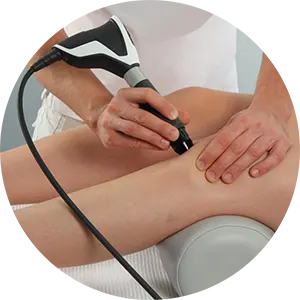
Shockwave therapy works by delivering high-energy acoustic waves directly to the injured tendon. Those waves create controlled microtrauma in the tissue, which kickstarts the body’s healing response in tendons that have stopped repairing themselves.
Here’s what makes shockwave particularly effective for Achilles tendonitis: it stimulates new blood vessel formation. The treatment increases the production of growth factors like VEGF (vascular endothelial growth factor), which promotes the development of new capillaries in the tendon. More blood vessels mean better circulation, which is exactly what the Achilles needs to heal.
Shockwave also breaks down scar tissue and calcifications that have built up in the tendon over time. It increases collagen production, which strengthens the tendon’s structure. And it has a pain-relieving effect by disrupting the nerve signals that send pain messages to your brain.
At Indian Trail Chiropractic & Rehab, Dr. Gentile uses shockwave therapy for patients dealing with chronic Achilles pain that hasn’t responded to rest, stretching, or physical therapy. The treatment is non-invasive, doesn’t require downtime, and addresses the underlying tissue damage rather than just masking symptoms.
What to Expect During Treatment
A shockwave session for Achilles tendonitis takes about 10 to 15 minutes. You’ll feel a rapid tapping or pulsing sensation on the back of your ankle and heel. It’s not comfortable—most patients describe it as intense pressure or a deep ache—but it’s tolerable. The intensity can be adjusted based on how much you can handle.
Most treatment plans involve 3 to 6 sessions, spaced about a week apart. Some people notice improvement after the first couple of sessions, but real healing happens gradually as new tissue forms and blood flow increases over the following weeks.
You might feel sore for a day or two after treatment, similar to the soreness you’d feel after a tough workout. That’s normal and actually a sign that the tissue is responding. You can walk and do most daily activities afterward, though Dr. Gentile may recommend avoiding high-impact exercise during the treatment phase to give the tendon the best chance to heal.
Why Athletes Respond Well to Shockwave
Dr. Gentile’s background as a Certified Strength and Conditioning Specialist and his years working with athletes give him a solid understanding of how tendons respond to load and stress. He’s seen firsthand how frustrating Achilles injuries can be for runners, basketball players, and anyone who depends on explosive lower-body movement.
Shockwave appeals to active people because it doesn’t require them to stop training entirely. You may need to modify intensity or volume temporarily, but you’re not sidelined for months while hoping the tendon heals on its own. The treatment accelerates healing, which gets you back to full activity faster.
That said, shockwave isn’t a substitute for addressing the underlying issues that caused the injury. If your Achilles tendonitis developed because of tight calves, weak ankles, or poor running mechanics, you’ll need to fix those problems too. Otherwise, the tendon will just get overloaded again once you return to normal training.
Combining Shockwave With Rehabilitation
Shockwave works best when it’s part of a comprehensive treatment plan. Stretching and strengthening exercises are critical for restoring tendon health and preventing re-injury. Eccentric loading exercises—where you slowly lower your heel while standing on your toes—have strong evidence for Achilles tendon recovery.
Soft tissue work like Active Release Technique or Graston Technique can release tension in the calf muscles and surrounding fascia, which reduces strain on the Achilles. If biomechanical issues like overpronation are contributing to the problem, custom orthotics may help distribute force more evenly and take pressure off the tendon.
At our practice, treatment isn’t just about eliminating pain—it’s about restoring function and building resilience so the injury doesn’t keep coming back every time you try to run or jump.
Is Shockwave Right for Your Achilles Pain?
If you’ve been dealing with Achilles tendonitis for more than a few months and haven’t found relief with rest, stretching, or physical therapy, shockwave is worth considering. It’s particularly effective for chronic cases where the tendon has started to degenerate and other treatments have plateaued.
You’re not a good candidate if you’re pregnant, have a pacemaker, or are taking blood-thinning medications. Active infections or certain circulatory conditions near the treatment site would also rule out shockwave. Dr. Gentile will evaluate your ankle and review your medical history before recommending treatment.
The other factor is commitment. Shockwave isn’t a quick fix. You’ll need multiple sessions, and you’ll need to follow through with rehabilitation exercises and activity modifications. Partial effort gets partial results.
When Surgery Becomes Necessary
Most cases of Achilles tendonitis respond well to conservative treatment, including shockwave therapy. But in severe cases where the tendon has ruptured or has extensive degeneration that doesn’t improve with non-surgical options, surgery may be necessary.
The goal is to avoid that if possible. Surgery comes with significant recovery time—often months of immobilization and rehab—and doesn’t always guarantee a return to pre-injury activity levels. Shockwave offers a way to stimulate healing and restore function without the risks and downtime of a surgical procedure.
FAQs
How soon can I return to running after shockwave therapy?
That depends on the severity of your injury and how your tendon responds to treatment. Some patients can return to light running within a few weeks, while others need a couple of months. Dr. Gentile will guide you through a gradual return-to-activity plan based on your progress.
Does shockwave therapy hurt?
It’s uncomfortable during the session—most people rate it as a 5 to 7 out of 10 on the pain scale—but the discomfort only lasts while the device is active, usually 5 to 10 minutes. It eases immediately once the session ends.
Can shockwave help with other ankle and heel pain?
Yes. Shockwave is also effective for plantar fasciitis, heel spurs, and other chronic soft tissue injuries in the lower leg and foot. It works best on conditions where poor blood flow is limiting healing.
How long do the results last?
Many patients experience long-term relief after a full course of treatment. The healing that shockwave stimulates is real tissue regeneration, not just temporary symptom relief. That said, if you return to the activities that caused the injury without addressing movement issues, you could re-injure the tendon.
Ready to find out if shockwave therapy can get you back to running, walking, and moving without Achilles pain? Schedule an appointment with Dr. Gentile or call (704) 821-3222.