
Shockwave therapy is one of the most effective non-surgical treatments for jumper’s knee, also called patellar tendinopathy. It stimulates healing directly in the damaged patellar tendon by triggering new blood vessel growth, reducing pain signals at the source, and prompting the tendon to rebuild healthier tissue. At Indian Trail Chiropractic & Rehab, Dr. Gentile uses shockwave therapy to resolve stubborn knee tendon pain that hasn’t responded to rest, medication, or other treatments.
What Is Jumper’s Knee?
Jumper’s knee is a chronic overuse injury of the patellar tendon, the band of tissue connecting your kneecap to your shinbone. It creates pain at the front of the knee, just below the kneecap.
The condition is common in athletes who jump and land repeatedly, like basketball and volleyball players. But it also affects runners, weightlifters, and anyone whose activities load the knee repetitively.
Despite the “jumper’s” name, you don’t have to be an athlete to develop it. Patellar tendinopathy can affect anyone who places repeated stress on the knee.
Why Jumper’s Knee Is So Hard to Treat
If you’ve dealt with jumper’s knee, you already know it’s frustrating. The pain improves with rest, then returns the moment you resume activity.
Here’s why. The patellar tendon has a poor blood supply, which means it heals slowly and incompletely on its own. Over time, the tendon develops degenerative changes and disorganized collagen rather than healthy, aligned tissue.
Rest reduces pain temporarily but doesn’t stimulate the tendon to actually heal. This is why so many people cycle through months of rest, anti-inflammatories, and bracing without resolving the problem.
How Shockwave Therapy Works for Jumper’s Knee
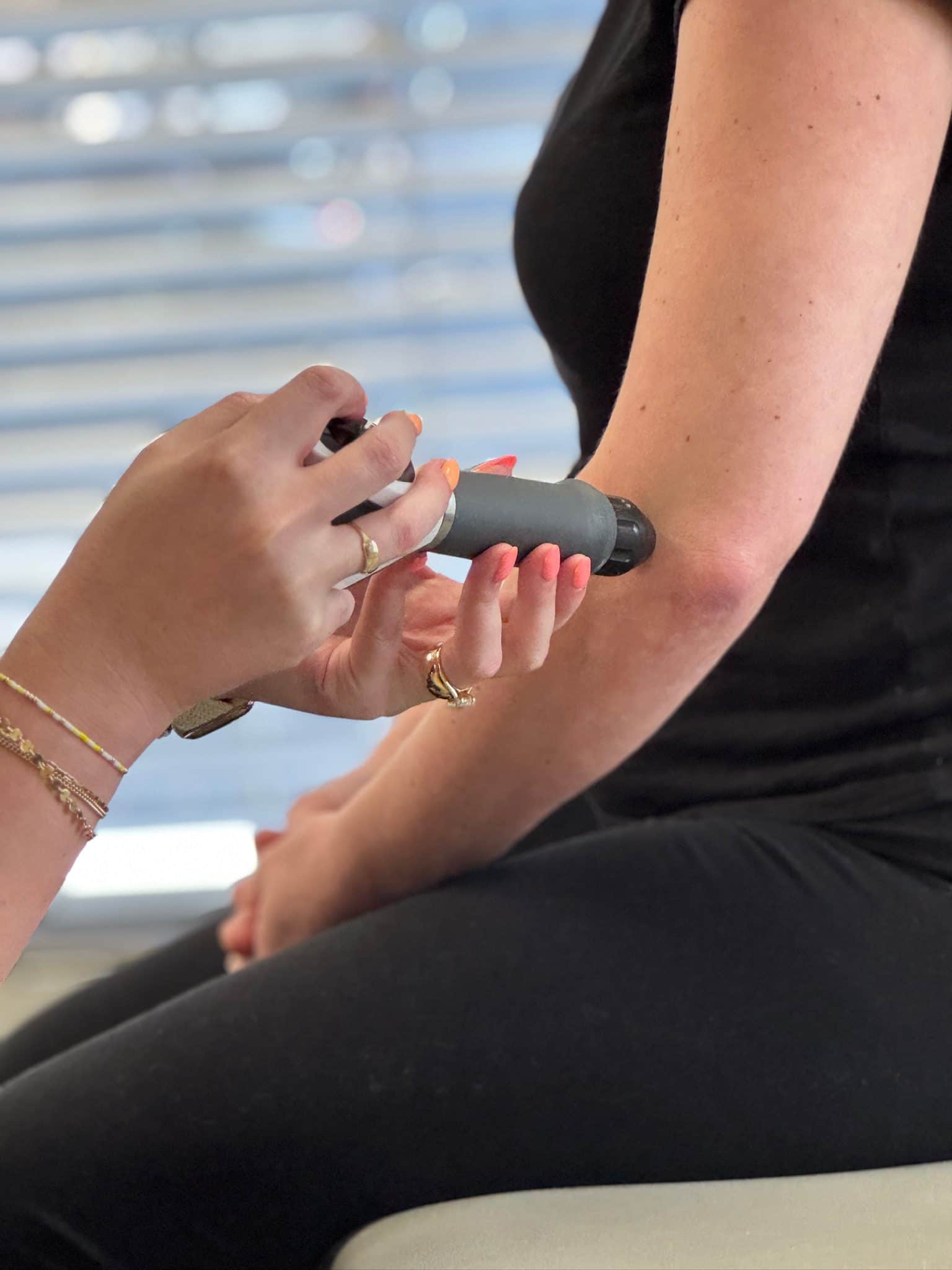
Shockwave therapy directly addresses the stalled healing that defines chronic tendon problems. Our shockwave therapy delivers high-energy acoustic pressure waves into the patellar tendon, triggering a cascade of healing responses.
It Grows New Blood Vessels
Shockwave stimulates neovascularization, the growth of new blood vessels into the poorly-perfused tendon. This increased blood supply brings the oxygen and nutrients the tendon needs to repair itself.
This is exactly why shockwave works so well on chronic tendon injuries that have stopped healing on their own.
It Reduces Pain at the Source
Shockwave downregulates substance P, a chemical messenger involved in transmitting pain signals. This lowers your pain at its source rather than simply masking it like medication does.
It Rebuilds Healthy Tendon Tissue
The acoustic waves stimulate collagen production and prompt the tendon cells to remodel disorganized, degenerated tissue into healthier, properly aligned collagen fibers.
This is the key difference. Shockwave doesn’t just calm symptoms. It drives the tendon to actually repair itself.
Why Shockwave Is Chosen for Stubborn Cases
Shockwave therapy is often the right choice when rest, medication, and injections haven’t produced lasting results. Athletes and active patients in Indian Trail appreciate that it addresses the root problem in the tendon rather than providing temporary relief.
It’s non-surgical, requires no medication, and works with your body’s natural healing processes.
Symptoms of Jumper’s Knee
Patellar tendinopathy presents with characteristic symptoms that worsen as the condition progresses.
Pain and tenderness directly below the kneecap is the hallmark sign. Pain that worsens with jumping, squatting, climbing stairs, or sitting for long periods. Stiffness in the knee, especially in the morning or after activity. A tendon that feels tender when you press on it.
Early on, pain might only appear after activity. As it progresses, pain occurs during activity and eventually with everyday movements.
How We Diagnose Jumper’s Knee
Accurate diagnosis ensures shockwave therapy is the right treatment for your specific situation.
Physical Examination
I assess the patellar tendon for tenderness, evaluate your knee range of motion, and perform tests that load the tendon to reproduce your symptoms.
Movement and Biomechanical Assessment
Jumper’s knee often develops because of biomechanical issues that overload the patellar tendon. I evaluate your hip strength, ankle mobility, and movement patterns to identify what’s contributing to the problem.
Weak hips or poor landing mechanics place excessive stress on the patellar tendon. Addressing these factors prevents the problem from returning.
Our Complete Approach to Jumper’s Knee
Shockwave therapy is highly effective, but combining it with other treatments produces the best, most lasting results.
Shockwave Therapy
Shockwave stimulates healing in the degenerated tendon. This is the foundation of treatment for chronic patellar tendinopathy.
Soft Tissue Therapy
Tight quadriceps and surrounding muscles increase tension on the patellar tendon. Active Release Technique releases these restrictions, reducing stress on the healing tendon.
Corrective Exercise
Eccentric strengthening is proven to help tendons rebuild capacity. Our corrective exercise programs include the specific loading exercises that restore tendon strength and durability.
Addressing Biomechanics
If hip weakness or poor movement mechanics caused your jumper’s knee, we correct those issues. This prevents the tendon from being overloaded again once you return to activity.
Shockwave vs. Other Treatments for Jumper’s Knee
Understanding how shockwave compares to other options helps explain why it’s so effective.
Shockwave vs. Rest
Rest reduces pain but doesn’t stimulate tendon healing. Shockwave actively drives the repair process, addressing the degeneration that rest leaves untouched.
Shockwave vs. Cortisone Injections
Cortisone reduces inflammation temporarily but can actually weaken tendon tissue over time. Shockwave strengthens the tendon by stimulating healthy collagen production.
Shockwave vs. Surgery
Surgery for patellar tendinopathy involves significant recovery time and risks. Shockwave offers a non-invasive path to healing that helps most patients avoid surgery entirely.
What to Expect from Treatment
Shockwave therapy sessions are performed in our office and take only a few minutes per treatment area. You may feel some discomfort during treatment as the acoustic waves target the tendon, but most patients tolerate it well.
Mild soreness in the area for a day or two after treatment is normal and indicates the healing response is active. Results build progressively as the tendon repairs itself.
Every case is different, which is exactly why we start with a thorough evaluation to determine the right treatment plan for your specific presentation.
Returning to Sport and Activity
For athletes, returning to sport safely is the priority. We don’t just eliminate your pain. We rebuild the tendon’s capacity and correct the biomechanical issues that caused the problem.
This comprehensive approach means you return to your sport stronger and less likely to reinjure the tendon. Our sports performance optimization ensures you’re truly ready for the demands of your activity.
Why Choose Indian Trail Chiropractic for Jumper’s Knee
Chronic tendon problems require treatment that stimulates actual healing, not just symptom management. My background in sports performance and biomechanics gives me unique insight into why patellar tendinopathy develops and how to resolve it completely.
We combine advanced shockwave therapy with soft tissue work, corrective exercise, and biomechanical correction. This addresses both the damaged tendon and the root cause of the problem.
With over 20 years of experience treating athletes and active patients, we help people throughout Union County overcome stubborn knee tendon pain.
Get Relief from Jumper’s Knee
If knee tendon pain is limiting your activities or keeping you out of your sport, shockwave therapy offers a proven path to healing. At Indian Trail Chiropractic & Rehab, we help patients resolve patellar tendinopathy and return to full activity.
Ready to heal your jumper’s knee? Call us at (704) 821-3222 or schedule your appointment online today.