

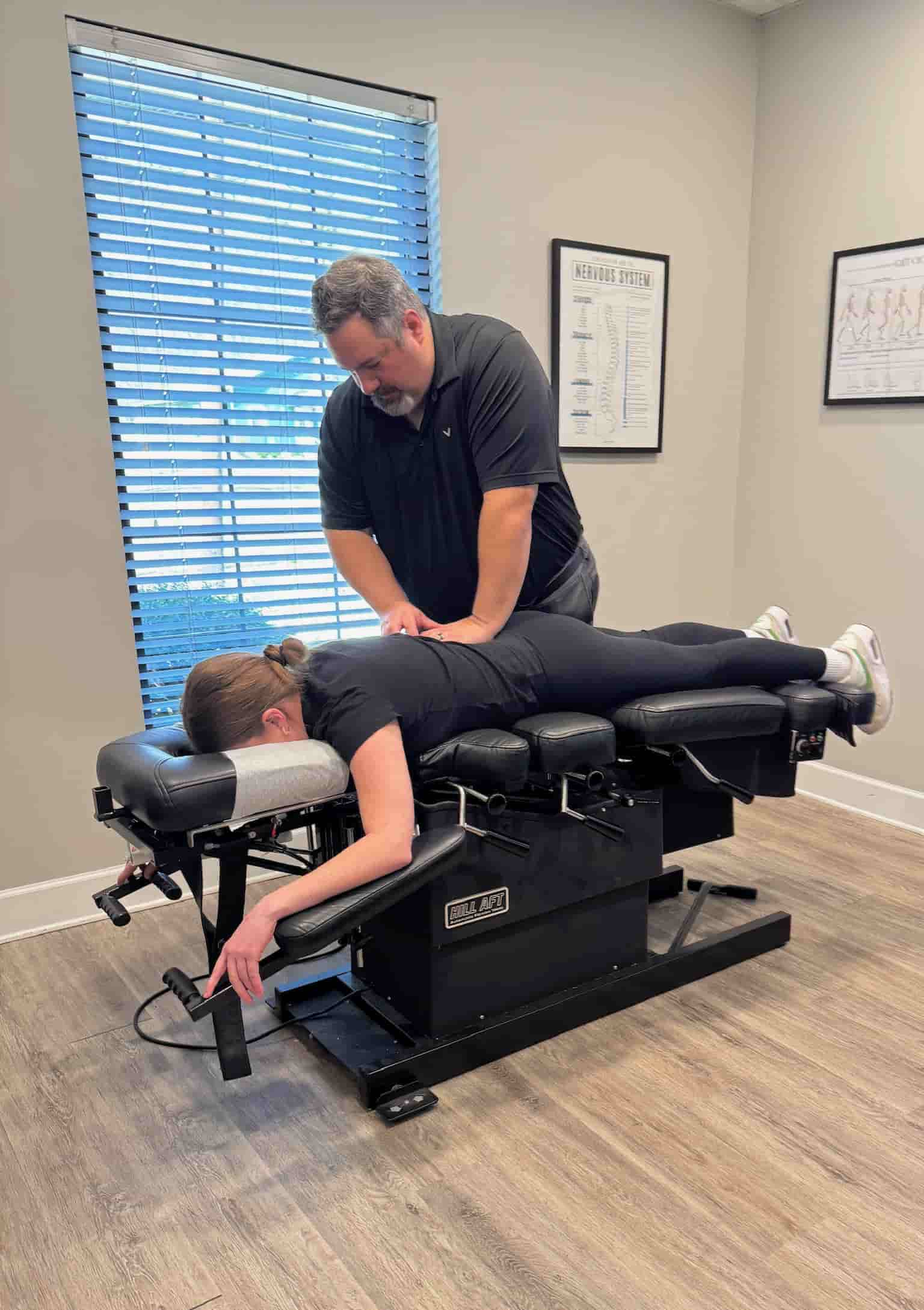
Cervical spinal decompression is a non-surgical treatment that can help neck and arm pain caused by a herniated or bulging disc or a pinched nerve in the neck. Performed on the FDA-cleared Hill DT system, it’s designed to gently unload the neck, lowering pressure on irritated discs and nerves. At Indian Trail Chiropractic & Rehab, Dr. Gentile uses cervical decompression as part of a complete plan, and for many patients it’s a helpful option to try before considering surgery.
What Is Cervical Spinal Decompression?
Cervical spinal decompression is a precise, controlled therapy that gently separates the vertebrae in your neck to reduce pressure on the discs and nerves. It’s aimed at the source of disc-related neck and arm pain rather than only masking symptoms.
It’s performed on the Hill DT decompression system, which uses load-sensor feedback to read your muscle response in real time and deliver decompression below the point where muscles tighten up to protect the neck.
That responsive approach is what helps keep the treatment comfortable.
How Cervical Decompression Works
Understanding the mechanism helps explain how cervical decompression can help disc-related neck and arm pain.
It Lowers Pressure Inside the Disc
Controlled decompression is designed to lower pressure inside the targeted disc, which may help ease herniated or bulging disc material away from the nerve it’s irritating.
It Unloads the Disc and Joints
Decompression unloads both the disc and the small facet joints at each treated level, easing pressure on irritated structures and creating more room for compressed nerves.
It Supports the Disc’s Healing Environment
By reducing pressure and supporting fluid and nutrient exchange, decompression may help the disc recover within the limits of its current condition.
Why This Isn’t the Same as Traction
Cervical decompression is different from simple traction. Traction applies a basic, steady pull, which tends to make the neck muscles tighten defensively. Decompression uses load-sensor technology to deliver controlled, targeted force aimed at a specific segment.
The Hill DT reads your body’s response and adjusts force accordingly, working below the threshold that triggers protective muscle guarding. That precision is what sets decompression apart from basic pulling.
Conditions Cervical Decompression Can Help
Cervical Disc Herniation and Bulging Discs
When a herniated or bulging disc in your neck presses on nearby nerves, it causes neck pain and radiating symptoms. Decompression aims to reduce that pressure so the disc and nerves can recover.
Cervical Radiculopathy (Pinched Nerve)
When a nerve root in your neck is compressed, it causes radiating pain, numbness, tingling, or weakness into the shoulder, arm, and hand. Decompression is designed to ease the pressure behind those symptoms.
Neck Pain From Disc Problems
Chronic neck pain from disc degeneration or dysfunction often responds well to decompression that unloads the affected segments.
Cervicogenic Headaches
Headaches that start in the neck can improve when the underlying disc and joint problems are addressed.
Symptoms Cervical Decompression Addresses
Cervical disc problems cause a range of symptoms:
- Neck pain and stiffness
- Pain spreading into the shoulder, arm, or hand
- Numbness or tingling in the arm or fingers
- Weakness in the arm or grip
- Headaches that start in the neck
Arm numbness and tingling can also come from nerve compression at the elbow or wrist, or from conditions like peripheral neuropathy. Learn more in our post on laser therapy for peripheral neuropathy.
When Neck Symptoms Need a Specialist First
Some neck problems put pressure on the spinal cord itself, and those aren’t a fit for decompression. See a spine specialist promptly for clumsy hands, trouble with buttons or handwriting, balance problems or an unsteady walk, or symptoms in both arms or legs. Get emergency care for neck pain after a fall or accident with numbness or weakness, rapidly worsening weakness, or changes in bladder or bowel control.
How We Determine If Decompression Is Right for You
Cervical decompression can work well for disc-related neck and arm pain, but a proper evaluation makes sure it’s the right treatment for your situation.
Comprehensive Evaluation
Dr. Gentile performs a thorough exam, including orthopedic and neurological testing, to find the source of your symptoms and whether your pain is coming from disc compression, nerve involvement, or something else.
Reviewing Imaging When Appropriate
When imaging is available or needed, it helps confirm the diagnosis and rule out problems that need different care.
Individualized Candidacy Assessment
Certain conditions, like severe osteoporosis, recent neck fractures, or spinal cord compression, rule out decompression or need special consideration. The evaluation determines whether decompression is right for you and how to tailor it.
Our Complete Approach to Neck and Arm Pain
Cervical decompression works best combined with complementary care.
Spinal Decompression
Decompression addresses the disc pressure and nerve irritation behind your symptoms. Learn more about our spinal decompression approach, or read about lower back decompression.
Chiropractic Adjustments
Gentle adjustments restore better movement to the neck joints, complementing decompression and supporting overall neck function.
Soft Tissue Therapy
Muscle tension and spasm often come with cervical disc problems. Active Release Technique eases that tension, reducing pain and supporting recovery.
Corrective Exercise
Strengthening the muscles that support your neck and improving posture helps maintain the progress you make. Our corrective exercise programs address the factors that contributed to the problem.
How Decompression Compares to Other Options
Decompression vs. Pain Medication
Medication can ease neck and arm pain for a while but doesn’t change the disc pressure behind it. Decompression is aimed at that pressure, so the two can work together, and you should never change prescribed medication without your doctor.
Decompression vs. Surgery
Neck surgery carries real risks and recovery time, though it’s the right choice for some patients, especially those with spinal cord compression or worsening weakness. For many people without those signs, cervical decompression is a reasonable non-surgical option to try first. Our post on avoiding back surgery explains how to think through that decision.
What to Expect During Treatment
Cervical decompression is comfortable. You lie down while the Hill DT system delivers controlled, gentle decompression to your neck, and the load-sensor technology responds to your body to keep it comfortable. Many patients find the sessions relaxing.
Improvement usually builds over a series of sessions as pressure on the discs and nerves eases. Because every case is different, we start with a thorough evaluation to set the right plan.
FAQs
Is cervical decompression safe?
For appropriate candidates, yes. Dr. Gentile screens for conditions that rule it out, like spinal cord compression, severe osteoporosis, or recent fractures, before starting treatment.
How many sessions will I need?
It depends on your condition and how you respond. Most patients need a series of sessions, and progress is reassessed along the way.
Why Choose Indian Trail Chiropractic for Cervical Decompression
Effective decompression takes both the right equipment and the expertise to use it well. We use the FDA-cleared Hill DT system and combine it with care that addresses every part of your neck and arm pain, helping patients throughout Indian Trail and Union County.
If neck pain or radiating arm symptoms are affecting your life, call us at (704) 821-3222 or schedule your appointment online.